
CONSERVATION AND SUSTAINABLE UTILISATION OF ROOT CROP GENETIC RESOURCES:
THE CASE OF SWEET POTATO AND CASSAVA IN MALAYSIA
Root crops such as sweet potato (Ipomoea batatas) [Convolvulaceae] and cassava (Manihot esculenta) [Euphorbiaceae] play a crucial role in Malaysia’s food security, climate resilience, and sustainable agriculture. However, their genetic diversity and traditional varieties are increasingly threatened by habitat loss, changing land use, and limited conservation efforts. This presentation highlights the ongoing initiatives and research efforts in the conservation and improvement of sweet potato and cassava genetic resources in Malaysia. Emphasis will be placed on the collection, characterisation, and conservation of important germplasm, including the development of mutant and improved lines for yield stability, stress tolerance, and nutritional enhancement. Key issues discussed include the need to strengthen ex situ and in situ conservation strategies, promote the integration of local and indigenous genetic resources including Crop Wild Relatives (CWRs) into breeding programs, and enhance collaboration between research institutions, local communities, and policymakers. The presentation will also explore how modern biotechnological tools and participatory approaches can support long-term conservation goals and ensure the sustainable utilisation of these underutilised but vital crops. By focusing on sweet potato and cassava, this presentation aims to demonstrate how conserving local genetic diversity contributes not only to national food security but also to broader biodiversity and climate adaptation objectives.
VIDEO RECORDS
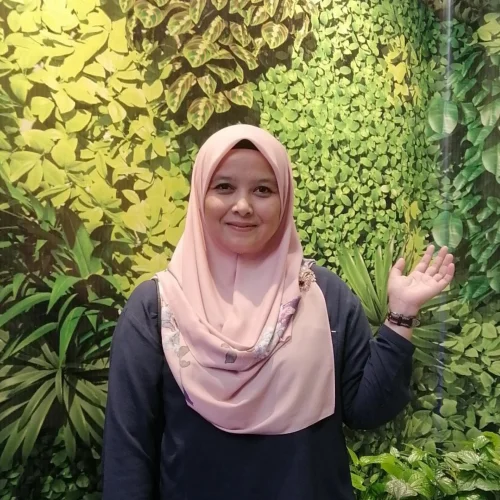
DR. NURUL AFZA KARIM
Malaysian Agricultural Research and Development Institute (MARDI)
Dr. Nurul Afza Karim is a Senior Research Officer at the Centre of Excellence for Roots and Tubers, MARDI Bachok, Kelantan. She began her career in 2004 and has since specialised in plant breeding, with a strong focus on root and tuber crops. She holds a Bachelor of Science in Plant Technology from Universiti Malaysia Sabah, as well as a Master of Science and a Ph.D. in genetics and plant breeding from Universiti Kebangsaan Malaysia and Universiti Malaysia Terengganu.
With over two decades of research experience, Dr. Nurul Afza has contributed to numerous projects aimed at improving crop yield, enhancing nutritional value, and developing new varieties for sustainable agriculture. One of her key achievements is the development of a high-yielding, purple-fleshed sweet potato rich in anthocyanins, now widely adopted by farmers in Malaysia. Her work continues to advance the country’s agricultural innovation and strengthen Malaysia’s position in root and tuber crop research.